Fibre Types and Microbial Diversity
An overview of how different fibre types are associated with microbial community composition
February 2026
Introduction
Dietary fibre is a term that encompasses various types of carbohydrates that are not digestible by human enzymes. Rather than being absorbed in the small intestine like other nutrients, fibres reach the colon intact, where they become available for bacterial fermentation. Scientific literature extensively documents associations between dietary fibre intake and the composition and diversity of the gut microbiota. This article provides an informational overview of how different fibre types are described in research literature in relation to microbial communities.
Types of Dietary Fibre
Dietary fibres are typically categorised based on solubility and fermentability, though these classifications overlap and vary in their specificity:
Soluble Fibre
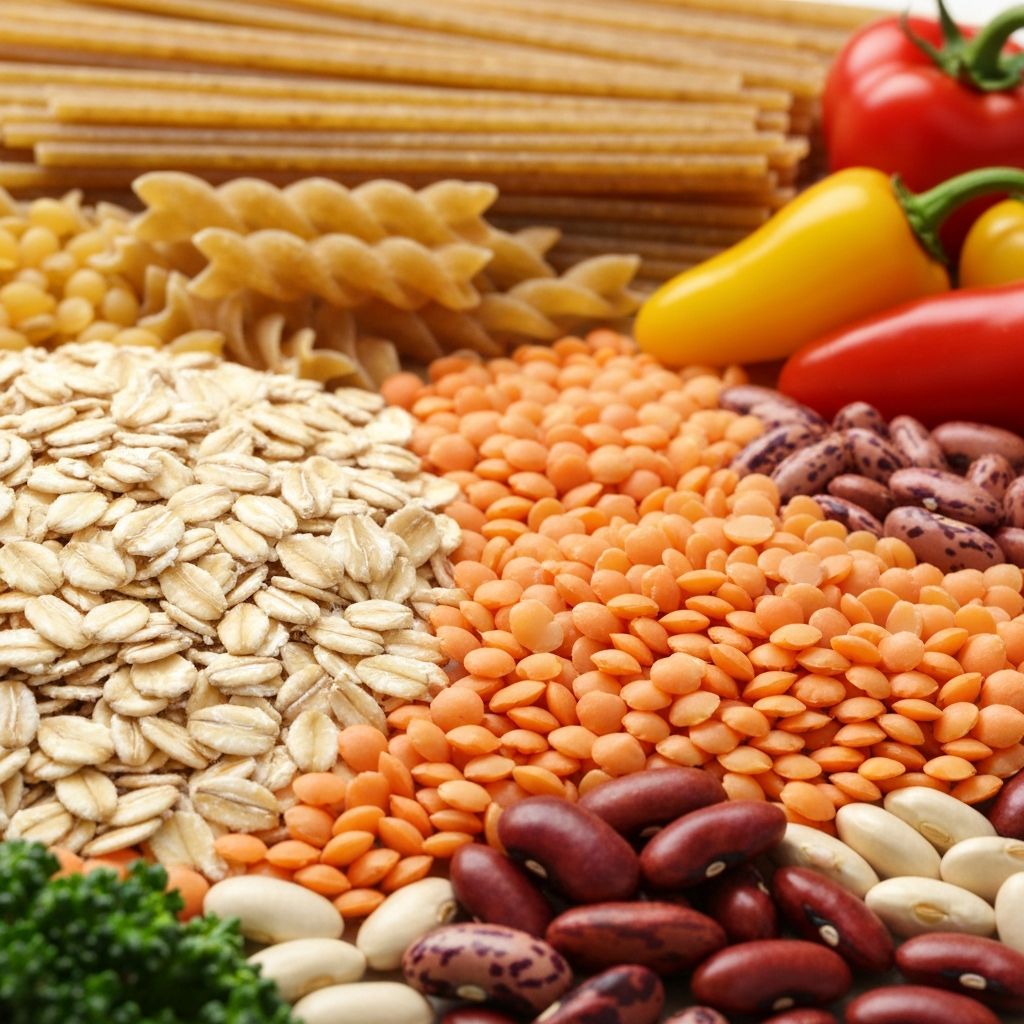
Soluble fibres dissolve or become viscous in water and are readily fermented by colonic bacteria. Sources include oats, barley, legumes, apples, and citrus fruits. In observational studies, higher intake of soluble fibres is associated with increased bacterial diversity and shifts in microbial composition toward certain taxa that are capable of fermenting these compounds.
Insoluble Fibre
Insoluble fibres do not dissolve in water and pass relatively intact through the intestinal tract. Common sources include whole grains, wheat bran, vegetables, and legumes. While less readily fermented than soluble fibres, insoluble fibres still reach the colon and can be acted upon by the microbiota. Research describes associations between insoluble fibre intake and microbial diversity patterns, though the mechanisms differ from those of soluble fibres.
Resistant Starch
Resistant starch is a category of starch that escapes digestion in the small intestine and ferments in the colon. Sources include cooled cooked potatoes, underripe bananas, legumes, and certain grains. Scientific literature frequently documents associations between resistant starch consumption and shifts in microbial communities, particularly increases in bacteria capable of fermenting starch-like substrates.
Mechanisms of Microbial Response
The mechanism through which dietary fibres influence microbial composition is primarily fermentation. When fibres reach the colon, specific bacterial taxa possess enzymes capable of breaking down these complex carbohydrates. This fermentation process generates energy for those bacteria, potentially allowing them to proliferate. Different fibre types are fermented by different bacterial species, meaning that the composition of dietary fibre intake may influence which microbial taxa become dominant in the community.
Short-chain fatty acids (SCFAs)—particularly butyrate, propionate, and acetate—are produced as byproducts of fibre fermentation. Research describes potential roles for these metabolites in host physiology, including effects on intestinal barrier function, immune signalling, and metabolic processes, though the practical significance in humans remains an area of ongoing investigation.
Research Findings
Observational and intervention studies in the scientific literature consistently report associations between higher fibre intake and greater microbial diversity. Cross-sectional studies document that individuals consuming higher amounts of dietary fibre tend to have more diverse microbial communities compared to those consuming lower amounts. Some specific fibre types have been studied in greater detail:
Inulin and Oligofructose: These soluble fibres are readily fermented and are documented in research as selectively promoting the growth of certain bacterial genera, particularly Bifidobacterium. Intervention studies report changes in microbial composition following supplementation with these fibres, though individual responses vary.
Whole Grains: Regular consumption of whole grains is associated in observational studies with higher microbial diversity. The fibre content of whole grains appears to support this association.
Legumes: As sources of both soluble and insoluble fibre, as well as resistant starch, legumes are noted in research as associated with diverse microbial communities and specific bacterial taxa.
Individual Variability
An important consideration in fibre and microbiota research is substantial individual variation in response. While population-level associations exist between fibre intake and microbial composition, individual responses to the same fibre sources can differ significantly. This variation is attributed to differences in baseline microbial composition, genetic factors, other dietary components, and lifestyle variables.
Important Limitations
Several limitations should be noted when interpreting research on fibre and microbiota:
- Observational Design: Most evidence comes from cross-sectional or short-term intervention studies, which cannot establish causation.
- Individual Variation: Responses to fibre interventions are highly variable between individuals.
- Confounding Factors: Fibre intake is correlated with many other dietary and lifestyle factors that may also influence the microbiota.
- Measurement Variability: Different studies use different methods to assess fibre intake and microbial composition, complicating comparisons.
- Functional Significance: Changes in microbial composition may not necessarily translate to changes in microbial function or health outcomes.
Conclusion
Dietary fibre is extensively described in scientific literature as associated with microbial diversity and composition. Different fibre types appear to support the growth of different bacterial taxa through selective fermentation. However, substantial individual variation, methodological differences across studies, and inability to establish causation from observational research highlight the complexity of fibre-microbiota relationships. Understanding these associations is an ongoing area of research, and generalisation from population-level findings to individual situations remains limited.